Weird Anteater – From the archive #35

Pantanal, Brazil, August 2005

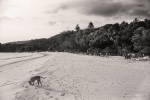
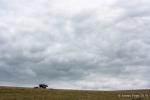
This is odd behaviour for a southern tamandua anteater (tamandua tetradactyla).  They’re usually found in trees, not wandering open grassland.  In fact, tamanduas are so badly adapted for living on the ground, they have to walk on the outside of their feet to stop their claws piercing their palms.

What’s more, being nocturnal, they’re normally fast asleep during the day.

The tamandua’s mouth opens barely wider than the width of a pencil, but their tongues can be up to 40cm long – perfect for licking up ants and termites.
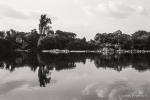

This fellow was ambling around in Brazil’s Pantanal – the world’s largest wetland – looking for bugs under cowpats.

Canon EOS 50e, Sigma 70-210mm f2.8, Kodak Portra 400 VC

Posted in Uncategorized | Leave a comment

The volcanic tsunami that broke an empire

3700 years ago, Mount Thera exploded with a force that ruptured the fabric of an entire civilisation.  Humans had been coping with the area’s angry tectonics for centuries, but for the Minoans of Crete, something made this eruption truly devastating. 

In 2000, scientists found tsunami traces in sediments from Crete and Turkey.  Now, researchers have uncovered the full horror of the waves that crippled the Aegean’s most powerful traders.
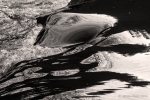
Today the island of Santorini, as Mount Thera is now known, is a peaceful tourist paradise of white walls and turquoise water.  But in 17th century BC, it was a great furnace of lava, ash and steam.

Studying Santorini’s rocks reveals that the eruption built in stages.  First, small explosions littered the south of the island with a thin ash layer.  Then, as the magma chamber under the volcano emptied, it began to slump and bigger explosions sent phyroclastic flows – superheated avalanches of boulders, gas and pulverised rock  – charging down its flanks.

When the volcano collapsed completely, all hell broke loose as sea water flooded into the cauldron of magma.  Imagine the effect of throwing water on a chip pan fire (see here for an example) then multiply by a billion.  Two giant pyroclastic flows, both 55 metres thick and carrying 30 cubic kilometres of material, swept into the sea, followed by a fourth phase of activity as gas rushed out of the mamga chamber.  Then it rained.

The team of researchers from Greece and Hawaii used computer models to estimate marine effects from both pyroclastic flows and the mountain’s collapse.  By adding sea floor topography data from Thera and the surrounding islands, together with estimates of the pyroclastic flow volume and water displaced by the slump, they were able to predict the tsunami wave size.

Results published in Geophysical Journal International suggest the waves were gigantic.  Pyroclastic flows hitting the sea sent ripples fanning out from the south of the Island.  By the time they reached Crete, some towered 90 feet (28 metres) over the Minoan harbours.

But the tsunami generated when the volcano collapsed was truly terrifying.  Output from the rather inappropriately named FUNWAVE model suggests some crests were a staggering 160 feet (50 metres) high – the size of Nelson’s Column.

With boats smashed, harbours in ruins and livelihoods gone, the Minoans abandoned their coastal settlements, leaving themselves vulnerable to attack.  In just a few generations they’d succumbed to the Mycenaeans and twelve centuries of civilisation came to an end.

All that’s left of Thera now is the beautiful crescent of Santorini, with its beaches of black volcanic sand.  And while everything appears calm, the recent creation of sulphurous islands in the centre of Santorini’s lagoon is the first clue that the mountain is rebuilding.  Some day, Thera will explode again.

Posted in Uncategorized | Leave a comment

Getting over the ‘Great Dying’

Benthic foraminifera: hard to kill

It’s not how you fail, it’s how you bounce back.  And while the end-Permian mass extinction may have been nature’s greatest failure, new evidence shows its recovery was even more impressive than we thought.

Two hundred and fifty million years ago, life nearly died.  96% of marine species were lost, 70% of land vertebrates perished, and even insects, who have not been wiped out en-masse since, took a 50% hit.

No-one’s quite sure what caused the crisis at the Permian-Triassic boundary.  Theories of meteor strikes jostle with volcanic eruptions, methane emissions, loss of oxygen from the oceans and shifting tectonic plates.  Some see impact craters in Australia and Antarctica as undeniable proof of an extraterrestrial killer.  Others view huge outpourings of lava in Siberia with suspicion.

Whatever authored this catastrophe, it scoured the sea bed almost clean of animal life all over the world.   Until recently, scientists believed that it took five million years for ecosystems to recover.  Now though, with new discoveries in China, they think it may have been a fraction of that time.

Originally the long delay was thought to be from the extinction’s enduring effects, or from new factors creating fresh adversity and further extinctions that prevented life from repairing.

But work by researchers from China, Australia and the UK shows that communities on the ocean floor began to flourish just one million years after the Permian-Triassic event.  By searching for life in sediments from the Yangtze and Nanpanjiang Basin in South China, the team led by Dr Haijun Song have challenged theories of extinctions in the early Triassic.

Not all species recovered at the same rate though.  Song’s results, published in Geology journal, show that algae and small creatures called forams were the first to shake off ill effects, while corals came much later.  The pacing of each species’ recovery seems to tie in with what’s known about the rate that they evolve.  So those able to adapt into the new niches quickest saw the fastest turn around.

The discovery suggests that recovery from mass extinction is much faster and more complex than we originally thought.   And with authoritative voices claiming that we’re going through a mass extinction right now, we need more research into these past events, so we can understand who lives, who dies, who recovers and, most importantly, why.

Posted in Uncategorized | Leave a comment

Antarctica’s chilling tale

37 million years ago, Antarctica looked like this

How did Antarctica come to be a barren, treeless land of ice?  Once carpeted with flowers and forests, today it’s a frozen desert, good only for mosses, lichens and a few hardy species of grass.  So what happened?  Scientists drilling off the Antarctic Peninsula – the last refuge for plants as temperatures fell – have tracked its chilling story.

When Captain Scott and his team perished in 1912, they’d lost the race for the South Pole by five weeks, but their deaths were not entirely in vain.  Because packed into their sledges were several pounds of rock collected by team doctor Edward Wilson.  Among the samples were the fossilised remains of ancient leaves – the very first clues that Antarctica wasn’t always so harsh.

A century on, and scientists are still using fossil fragments to piece together Antarctica’s climate history, though the technology has come a long way from knocking off bits of rock with a hammer.  Sixteen researchers, led by Dr John Anderson of Rice University, Houston, commissioned the RV Nathaniel B. Palmer – 94 metres of state-of-the-art research ship named after the first American to lay eyes on Antarctica.

During four cruises along the Antarctic Peninsula’s coast, the team drilled the sea floor for ancient sediments.  Among the mud and grit they found fossilised pollen that offers the clearest picture yet of which plant species were present, and when they met their frosty demise.

Results published this week in Proceedings of the National Academy of Sciences, reveal that 37 million years ago, flowers, ferns and forests of southern beech enjoyed mean annual temperatures of 10.8°C – similar to Southern Patagonia today.  But it wasn’t to last.  Falling atmospheric carbon dioxide levels cooled the climate and mountain glaciers began to form.

Antarctica today, with the Antarctic Peninsula extending West

By around 23 million years ago, conditions were getting tough.  The flowers and ferns were gone and the southern beech was giving way to pine and low, shrubby tundra plants.

The final switch from Alpine-type conditions to the vast ice sheets we see today came at around 12 million years ago, killing off even the hardiest of tundra species.

While researchers blame falling atmospheric CO2 levels for the initial cooling, they believe Antarctica’s deep chill comes from being cut off from the rest of the world.

50 million years ago, Antarctica was joined to both South America and Australia, but since then tectonic processes have ripped the continents apart, allowing the frigid current that endlessly circles Antarctica to gain strength and block warmer currents from the Tropics.

However, the Antarctic Peninsula has warmed by 3°C since 1950, and with climate change predicted to raise temperatures further, could we see life returning to Antarctica’s frostbitten finger?

Posted in Uncategorized | 1 Comment

Moon birth theory holds no water

Four and half billion years ago, a meteorite the size of Mars slammed into Earth, melting the entire surface of our planet and throwing billions of tonnes of rock into space.  In time, the ejected rubble – baked dry by the explosion’s searing heat – condensed into a parched, lifeless satellite, the Moon. 

This is scientists’ best-received theory on how our nearest neighbour came to be.  Or it was… until this week’s discovery of water in rocks from a lunar volcano.

Most rocks on Earth contain a small amount of water, even those deep below the crust in a layer known as the mantle.  Water dissolved in molten rock is partly responsible for violent volcanic explosions.  As magma rushes to the surface, the pressure drops and the water vaporises and rapidly expands – a process known as degassing.

In contrast, scientists thought Moon rock was dry and took this as key evidence for the giant impact theory.  But work published in Science by US geologists shows that volcanic rock samples collected from the Moon during the Apollo 17 mission are up to 0.14% water – similar to levels found in rocks from the Earth’s upper mantle.

Solidified lava from volcanoes provides a rare window into what makes up the inside of Earth and the Moon, but degassing removes water and other key elements from the rocks, making it difficult to understand the exact composition of a planet’s interior.

Tiny melt inclusions tell grand stories

To get round this problem the US team, led by Dr Erik Hauri of Washington’s Carnegie Institution, looked for melt inclusions – tiny geological time capsules of the original molten rock that become trapped inside crystals as they start to grow before an eruption.   The crystal shields the trapped melt and stops it losing water.

By testing melt inclusions in lunar olivine crystals, Hauri’s team found water, fluorine, sulphur and chlorine at levels close to that of Earth’s mantle rocks.

Their discovery doesn’t just cause problems for the big impact theory, it also challenges the idea that light elements were brought to the Earth and Moon by a procession of smaller meteorite strikes after the giant impact.  The meteorite history of Moon and Earth are radically different, so if the composition of their mantle rocks is similar, as these findings suggest, another explanation is needed.  Dr Hauri’s team proposes two.

First, the big impact could have created a hot, turbulent atmosphere that enveloped the Earth and all the shattered debris while the Moon formed.  The light elements may have been evenly distributed throughout this atmosphere and, once everything had calmed down, the Moon and Earth ended up with a similar quota.

Second, a large portion of the rocks that make up the Moon’s interior could have simply escaped the melting and drying out proposed in the original theory.

Whatever the true story, Dr Hauri’s team has certainly opened up the field to new speculation.  And while their discovery might confuse the issue of the Moon’s birth, it could neatly explain why, in 2001, Feldman et al found water ice in its craters.

Posted in Uncategorized | 1 Comment

Running Herd – From the archive #34

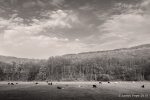
Pantanal, Brazil, August 2005

Eight million cows roam Brazil’s Pantanal – the world’s largest wetland – and with all that beef chomping through the area’s vegetation, environmentalists are nervous that native mammals could be pushed out.  However, a recent dung study shows their fears may be unfounded.

The Pantanal has been home to cattle ranchers since the mid-18th century.  Today, 95% of the area is privately owned by farmers who feed the fast food outlets of Brazil’s burgeoning cities.

As well as bringing much-needed income, the cows provide a fire-fighting service in the dry season by clearing large amounts of highly-flammable plant debris.  But despite the benefits, there’s serious concern that competition for food could cause problems for indigenous pampas deer and capybara – a sort of giant guinea pig.

To understand the issue better, scientists from Brazil and Scotland collected dung from the three mammals and analysed what they’d been eating.

Their results, published in Mammalian Biologyshow that deer have completely different taste to cows – preferring leaves and shrubs.  And, while capybara go for the same grasses as cattle, the scientists saw that grazing cows keep the overall grass length down, allowing succulent new shoots to grow which are far more nutritious for the outsize rodents.

So it seems cattle ranching, if kept at current intensities, might actually be good for local wildlife.  “It is one of the very few examples of sustainable management in a tropical biome,” say the scientists.

Canon EOS 50e, Sigma 70-210mm f2.8, Kodak Portra 400VC

Posted in Uncategorized | Tagged , , , , , , , , , , , | Leave a comment

Fresh water from sunlight

The Sun has finally got his London hat on.  So to celebrate, here’s a warming story about smart scientists using solar energy to alleviate water poverty.

The Middle East is almost always sunny.  Jordan, for example, gets some of the highest levels of solar energy in the world – seven times as much as London on average.  While Brits might envy that most of the year, it causes serious water supply problems. 

Five hundred cubic metres of fresh water per person per year is considered critically low.  Jordanians average just 148 cubic metres per person and climate change is set to make this worse.

Converting sea water – desalination – is a possible solution, and a process called reverse osmosis seems most promising.  But filtering salty water by forcing it through membranes uses large amounts of electricity.  Neither Jordan nor the climate can afford to burn more fossil fuels and areas most in need of fresh water are often too remote for power lines.

Instead, scientists from Qatar and Jordan have built a reverse osmosis plant that’s powered entirely by solar panels – or photovoltaic cells as they’re technically known.  Batteries store excess energy from Jordan’s searing sunlight during the day and keep the water flowing at night.

The plant, described in a paper to be published in Renewable Energy journal, has excelled in testing and now converts water from northern Jordan’s salty springs, supplying the area with up to 1300 litres of fresh water every day.

Posted in Uncategorized | Tagged , , , , , , , , , , | 1 Comment